
horror
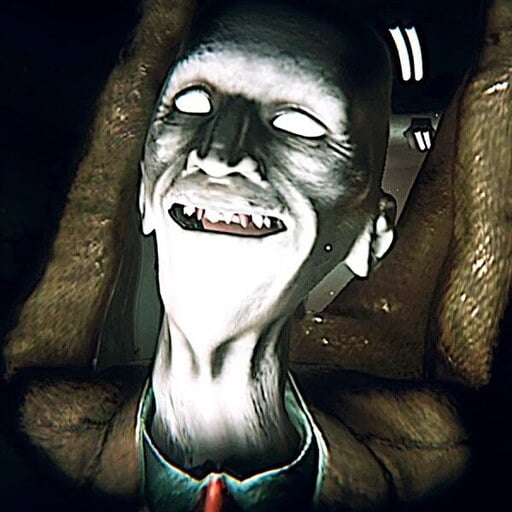
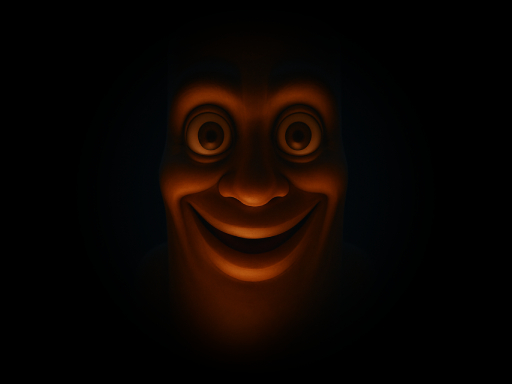
Psychological horror has a new, unsettling face in The Room That Look Familiar. While most games rely on sudden jumpscares or monstrous chases, this title leverages the concept of "liminal spaces"—places that feel hauntingly recognizable yet fundamentally wrong. It is a slow-burn experience designed to make you question your own memory as the environment subtly shifts around you, transforming a simple domestic space into a labyrinth of the mind.
Rating: 4.7/5 stars (based on over 8,400 user reviews)
Times Played: Over 1.2 million sessions since its viral breakout
Developer: Echo Chamber Interactive
Release Date: January 12, 2026
Platforms: Web Browsers (HTML5), PC, and specialized VR headsets
Technology: Developed using the Unity Engine with high-fidelity ray-tracing features for the desktop version
You wake up in a room. The wallpaper is a pale, faded floral print. The clock on the wall ticks with a heavy, metallic rhythm. You know this place. You’ve seen this chair, this lamp, and this rug a thousand times before—or have you? As you try to leave, you find that the door leads right back into the same room. But this time, the window is on the opposite wall. The next time, the door is missing entirely.
In The Room That Look Familiar, you play as an unnamed protagonist trapped in a recursive loop of their own childhood home. The narrative isn't told through dialogue, but through the objects you find: a discarded birthday card from 1994, a static-filled television broadcast, and the increasing realization that someone—or something—is watching from the hallway that wasn't there a moment ago. It is a story about the fragility of memory and the horror of being stuck in a past that refuses to stay consistent.
Escaping this loop requires more than just running; it requires an eye for detail and a steady hand.
1. Observe the "Familiarity": Each time you enter a new iteration of the room, take a full 360-degree look. Your goal is to identify the "Anomaly"—an object that has changed, moved, or appeared out of nowhere. If the room is identical, you may proceed. If something is different, you must interact with it to "fix" the loop.
2. Interactive Investigation: Use the Mouse to click and drag objects. Some drawers require you to physically pull them open, and some puzzles involve tuning a radio to specific frequencies heard in the background noise. Pay close attention to the audio cues; a distant whisper often indicates which wall you should be looking at.
3. The "Look Away" Mechanic: One of the game's unique features is that certain entities only move when they are not in your field of vision. If you see a shadow in the corner, keeping your eyes on it might save you, but you'll eventually have to turn away to solve the door puzzle. Use your Flashlight (F key) sparingly, as the light can sometimes attract more attention than it wards off.
4. Collecting Memory Shards: To reach the true ending, you must find three hidden items: the Broken Watch, the Blue Marble, and the Unopened Letter. These items do not glow or highlight; you must find them based on the logic of the house (e.g., checking under the floorboards or inside the vents).
Ready to lose your sense of direction? You can find The Room That Look Familiar on the following platforms:
Pro-Tip: If you find yourself stuck in a loop for more than five rotations, try staring at the grandfather clock until it strikes midnight. This often "resets" the logic of the house and provides a fresh path forward.
 Arcade
 Action
 Adventure
 Horror